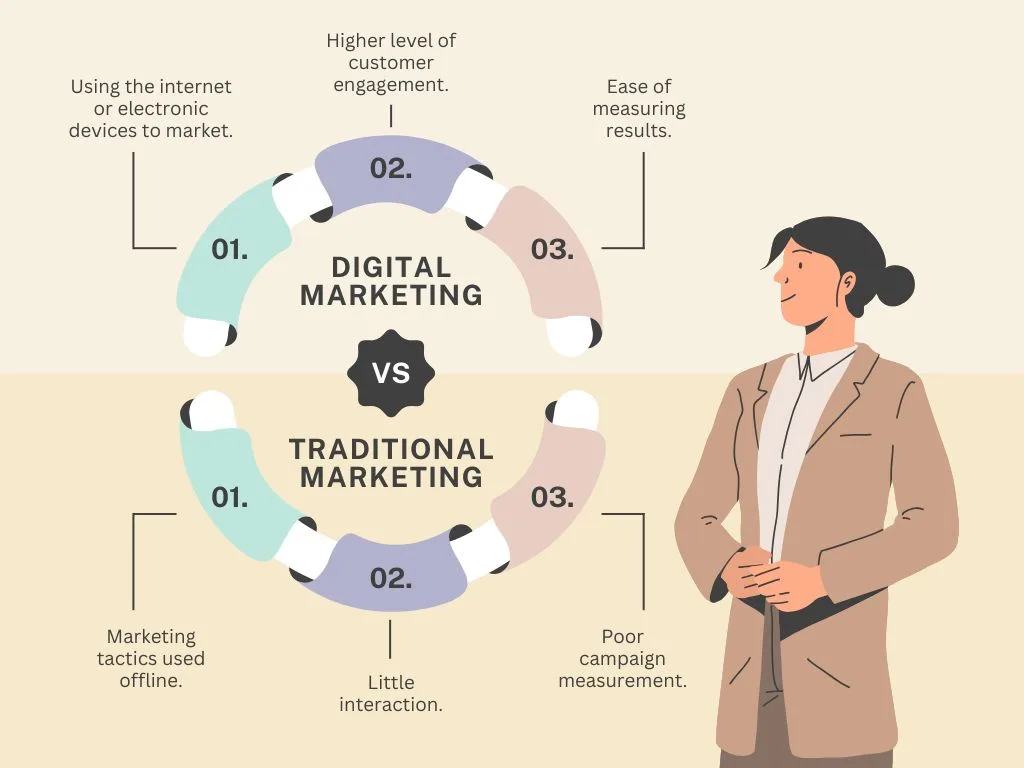
In today’s fast-changing business environment, one of the biggest questions entrepreneurs face is: Should I invest in digital marketing or continue with traditional marketing methods? The answer is not always simple, but one thing is clear—consumer behavior has shifted online. With smartphones, social media, and search engines dominating how people discover products, the effectiveness of marketing has also evolved. In this blog, we’ll dive deep into the differences between digital and traditional marketing, their pros and cons, and why digital marketing in 2025 is the clear winner for most businesses.
What is Traditional Marketing?
Traditional marketing refers to the age-old methods of promoting products and services. This includes television commercials, radio ads, newspaper and magazine advertisements, billboards, pamphlets, posters, and direct mail. For decades, these channels were the only way businesses could reach their customers.
While traditional marketing can still create a strong local impact, it often comes with limitations. It is expensive, hard to measure, and less targeted. For example, a billboard on a busy highway may reach thousands of people daily, but only a fraction of them may actually be interested in your product.
What is Digital Marketing?
Digital marketing is the promotion of products and services using the internet and digital platforms such as Google, social media, email, and websites. Unlike traditional marketing, digital allows businesses to reach a global audience instantly and track results in real time.
It covers a wide range of strategies, including:
-
Search Engine Optimization (SEO) – Ranking higher on Google searches.
-
Pay-Per-Click Advertising (PPC) – Running paid ads on Google or social media.
-
Social Media Marketing (SMM) – Engaging with audiences on Instagram, Facebook, LinkedIn, and more.
-
Content Marketing – Creating blogs, videos, and infographics that educate and build trust.
-
Email Marketing – Sending personalized offers and newsletters.
The biggest advantage of digital marketing is precise targeting. You can run ads specifically for people aged 25–35 who live in Indore, are interested in photography, and have searched for “digital marketing services.” This level of accuracy is impossible in traditional methods.
Advantages of Traditional Marketing
Even though digital is growing rapidly, traditional marketing still holds value in certain scenarios. Some of its benefits include:
-
Wider offline reach – Billboards and TV ads can reach people who are not active online.
-
Emotional connection – TV commercials and radio jingles often leave a lasting impression.
-
Brand credibility – Many people still associate newspaper ads or magazine features with trust.
-
Local effectiveness – Posters and flyers work well for local shops, events, and community activities.
However, the major drawbacks are the high costs, lack of analytics, and difficulty in tracking ROI (return on investment).
Advantages of Digital Marketing
Digital marketing is the game-changer of modern business growth. Some of its biggest strengths are:
-
Cost-Effective – Running a Google or Facebook ad campaign is far cheaper than a TV commercial.
-
Measurable Results – Analytics tools show exactly how many people clicked, visited, or purchased.
-
Global Reach – A small business can reach international customers instantly.
-
Targeted Advertising – Ads reach only those who are most likely to buy your product.
-
Flexibility – Campaigns can be paused, edited, or scaled anytime.
-
Better Engagement – Social media allows two-way conversations with customers.
-
SEO & Organic Growth – Long-term traffic without continuous spending.
Digital Marketing vs Traditional Marketing – A Side-by-Side Comparison
| Factor | Traditional Marketing | Digital Marketing |
|---|---|---|
| Cost | High (TV, print ads, billboards) | Affordable (ads start with ₹500/day) |
| Reach | Local / regional | Global + Local |
| Targeting | Broad, non-specific | Highly targeted |
| Analytics | Difficult to measure | Real-time tracking |
| Engagement | One-way communication | Two-way interaction |
| Flexibility | Hard to change once published | Easy to update anytime |
Why Digital Marketing Wins in 2025
The world has gone digital, and so have customers. With over 5 billion internet users worldwide, businesses cannot ignore digital marketing anymore. Even traditional businesses like restaurants, clothing shops, and local service providers are shifting online through Google Business profiles, social media ads, and e-commerce platforms.
The COVID-19 pandemic further accelerated digital adoption, and in 2025, customer journeys start online—whether they are searching for a café, a plumber, or a marketing agency. Businesses that do not invest in digital risk becoming invisible to their target audience.
When to Use Traditional Marketing
While digital marketing is the winner, traditional methods still have relevance. For example:
-
Events & Exhibitions – Flyers and posters help attract walk-ins.
-
Luxury Brands – TV ads and magazine features boost brand prestige.
-
Local Politics or Social Campaigns – Billboards and rallies have greater impact.
But even in these cases, combining traditional with digital brings maximum results.
Final Thoughts
So, which is better in 2025—digital marketing or traditional marketing? The answer is digital marketing dominates, but traditional can support depending on your industry. Businesses that want fast growth, measurable ROI, and targeted reach must invest in digital channels like SEO, PPC, and social media. At Dot Studio, we help businesses build the perfect strategy by combining creativity, branding, and advanced marketing tools to stay ahead in today’s competitive digital landscape.